Source Promotional Office School Ballpoint Pen for Business Gifts
Find 30 promotional office school ballpoint pen options with varying specifications like point diameter and material. Compare prices, customization features, and packaging details from verified suppliers to select the right writing instrument for your needs.
Key considerations
Products List


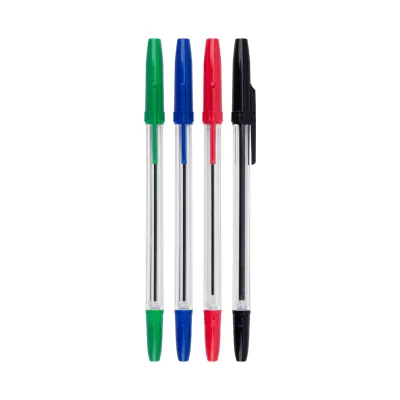


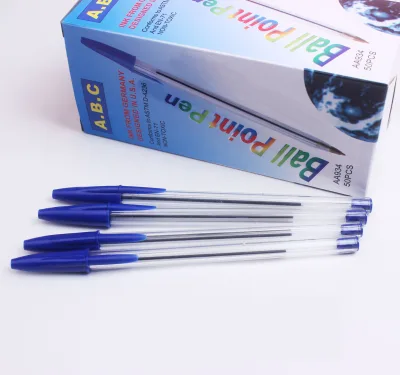


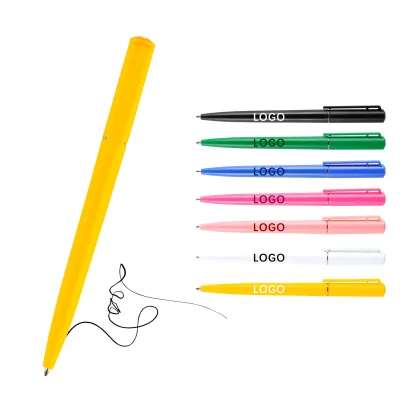
Comprehensive Sourcing Guide
Strategic Sourcing Guide for Promotional Office School Ballpoint Pens
Understanding the Product Category and Core Specifications
The market for promotional office and school ballpoint pens is defined by a high volume of transactions where functionality, branding visibility, and cost-efficiency intersect. When sourcing these items, buyers must first distinguish between the various technical configurations available, as the term "ballpoint pen" encompasses a wide range of specific product attributes. Based on current market observations, the core mechanical component is the ball point mechanism, often referred to as an oil ball pen, which relies on a rotating ball to transfer ink from a reservoir to the paper.
A critical differentiator in this category is the point diameter, which directly influences writing smoothness and line width. Sourcing data indicates that point diameters typically range from 0.5mm to 1.0mm. A 0.5mm tip is generally preferred for detailed office work and academic note-taking where precision is paramount, while a 1.0mm tip offers a bolder line suitable for general writing or faster note-taking. The ink delivery system is another vital specification; many units utilize a plastic Parker refill, a standard component known for reliability and consistent flow. The ink itself must be verified for safety, particularly when the end-user demographic includes students. Compliance with standards such as EN71, MSDS, and RoHS is frequently observed in reputable listings, ensuring the ink is non-toxic and safe for general use.
The physical construction of the pen is equally important. The primary material is almost universally plastic, chosen for its durability, moldability, and cost-effectiveness. However, the hardness of the plastic varies. Buyers should expect to encounter products with "partial hard" or "medium soft" characteristics. A medium soft body may offer a more comfortable grip for extended writing sessions, whereas a partial hard construction provides structural rigidity. The length and weight are also standardized specifications; observed standards include lengths around 128mm to 143mm and weights ranging from 10.4g to approximately 10g. These dimensions ensure the pen feels substantial enough to be perceived as a quality gift while remaining lightweight for portability.
Customization and Branding Capabilities
For promotional purposes, the ability to apply a logo is the primary value driver. The sourcing landscape supports extensive customization options, with "Logo Printing" being a standard feature across the majority of suppliers. The application of branding is not limited to a single method; suppliers typically offer a suite of printing techniques including pad printing, silkscreen, laser engraving, and heat transfer printing. This variety allows buyers to select the method that best suits their budget and the desired aesthetic finish.
The color configuration of the pen is another customization variable. While single-color options are common, four-color configurations are also available, allowing for more complex branding or multi-tone designs. The logo setup cost is a specific line item in the procurement process, with observed setup fees around 15 USD. This is a one-time cost that covers the creation of the printing plate or digital file preparation. It is essential to note that while customization is widely available, the "Erasable" attribute is generally absent in this category. Most promotional ballpoint pens are unerasable, designed for permanent record-keeping. This distinction is crucial for buyers targeting corporate environments where document permanence is required, as opposed to educational settings where erasability might be a specific preference, though less common for ballpoint variants.
Compliance, Certification, and Safety Standards
In the B2B procurement of writing instruments, particularly those intended for school use, regulatory compliance is non-negotiable. The ink used in these pens must meet specific safety standards to ensure they are safe for children and adults alike. The most frequently cited certifications in the market include EN71, which covers safety of toys, and RoHS (Restriction of Hazardous Substances), which limits the use of specific hazardous materials in electrical and electronic equipment, though often applied to the plastic components as well. Additionally, MSDS (Material Safety Data Sheet) documentation is a standard requirement to verify the chemical composition and safety handling of the ink and materials.
Buyers must verify that the supplier can provide current certification documents for every batch produced. While the market data shows these certifications are common, they are not automatic guarantees for every product listing. The absence of a specific certification in a product description should trigger a direct inquiry to the supplier. Furthermore, the packaging materials themselves should be evaluated for environmental compliance, especially if the buyer has sustainability goals. The transition from traditional plastic boxes to paper boxes or display boxes is a trend that aligns with modern corporate social responsibility initiatives.
Cost Drivers and Pricing Dynamics
The pricing of promotional ballpoint pens is influenced by a complex interplay of factors, including material costs, customization complexity, and order volume. The observed price range in the market is approximately 0.05 to 2.99 USD per unit. This wide variance is primarily driven by the quality of the plastic, the complexity of the printing method, and the specific model chosen. Lower-priced units often feature simpler designs, single-color printing, and standard plastic refills, while higher-priced units may include premium materials, multi-color printing, or specialized packaging.
The Minimum Order Quantity (MOQ) is a significant cost driver. Market data indicates an MOQ range of 100 to 10,000 units, with 1,000 units being a common threshold for standard promotional orders. Ordering below the MOQ often results in a significantly higher unit price or may not be feasible at all. The "Logo Set up" fee of 15 USD is a fixed cost that becomes negligible at high volumes but can impact the total cost for small orders. Buyers should calculate the total landed cost, including the setup fee, unit price, and shipping, to determine the true cost per branded unit.
| Cost Factor | Low Volume Scenario | High Volume Scenario | Impact on Unit Price |
|---|---|---|---|
| MOQ Threshold | 100 - 500 units | 1,000 - 10,000+ units | Higher unit price at low volumes |
| Setup Fee | 15 USD (one-time) | 15 USD (one-time) | Negligible impact at high volumes |
| Printing Method | Silkscreen/Pad | Laser/Heat Transfer | Complex methods increase cost |
| Packaging | Polybag/OPP | Paper Box/Display Box | Premium packaging increases cost |
Typical Applications and Usage Scenarios
The versatility of the ballpoint pen makes it suitable for a diverse range of applications. The primary usage categories identified include promotional pens, office and school pens, and business gifts. In a corporate context, these pens serve as effective marketing tools. They are often distributed at trade shows, conferences, or as client appreciation gifts. The "Logo Pen" classification highlights their role in brand visibility, where the pen acts as a daily reminder of the company's presence.
For the education sector, the pen is a staple item. Schools and educational institutions often procure these pens for student supplies, exams, or as rewards. The "Non-Disposable" attribute is a key feature here, as it implies the pen can be refilled or used for an extended period, reducing waste compared to disposable alternatives. The "Office & School Pen" designation also suggests a focus on reliability and smooth writing performance, which are critical for academic and professional productivity. The "Business Gift" category implies a need for a certain level of aesthetic quality, where the pen's design and feel contribute to the perceived value of the gift.
Supplier Evaluation and Quality Control
When evaluating potential suppliers, buyers should look beyond the basic product listing and assess the supplier's capability to meet specific quality standards. The "Delivery" status of "In Stock" is a significant advantage for urgent orders, but buyers must also consider the "Dilevery Time" for custom orders, which is observed to be around 15 days. For sample requests, a sample time of around 7 days is typical, allowing buyers to verify quality before committing to a large order.
Quality control should focus on the consistency of the printing and the mechanical performance of the pen. Buyers should verify that the "Point Diameter" is consistent across the batch, as variations can lead to writing issues. The "Single Gross Weight" of 0.010kg is a standard metric that can be used to verify that the packaging and contents match the specification. Additionally, the "Sample Avaliable" status should be utilized to test the ink flow, the hardness of the plastic, and the durability of the logo printing.
Long-Term Procurement Considerations
Sourcing promotional pens is not a one-time transaction but part of a long-term procurement strategy. Buyers should consider the scalability of their order. If a campaign is successful, the ability to reorder quickly is essential. The "In Stock" status suggests that some suppliers have the capacity for immediate fulfillment, which is beneficial for recurring needs. However, for custom orders, the lead time of 15 days must be factored into the project timeline.
Sustainability is an emerging consideration in long-term procurement. The shift towards "Paper Box" or "Display Box" packaging over "Plastic Box" or "Polybag" reflects a growing demand for eco-friendly options. Buyers should evaluate the supplier's willingness to adapt packaging to meet sustainability goals. Furthermore, the "Customization" availability suggests that suppliers can adapt to changing branding needs, such as updating logos or changing color schemes for different campaigns.
In conclusion, sourcing promotional office and school ballpoint pens requires a balanced approach that considers technical specifications, customization needs, compliance, and cost efficiency. By understanding the nuances of point diameter, ink certification, and printing methods, buyers can select products that meet their specific requirements. The wide range of options available, from 0.5mm to 1.0mm tips and various packaging types, ensures that there is a suitable solution for every application. Careful supplier evaluation and quality control measures will ensure that the final product delivers the desired brand impact and functional performance.
FAQs
What point diameters are available for these ballpoint pens?
Available point diameters range from 0.5mm to 1.0mm depending on the specific model. The 0.5mm tip is ideal for detailed office work, while the 1.0mm tip provides a bolder line for general writing tasks.
Which certifications ensure the ink safety for school use?
The ink typically holds EN71, MSDS, and RoHS certifications to ensure safety. These standards verify that the materials are non-toxic and compliant with regulations for children and general consumer use in educational settings.
Can I customize the pen with my company logo?
Yes, logo printing is available using pad, silkscreen, laser, or heat transfer methods. A one-time setup fee of 15 USD applies, and the pen body can be customized with single or four-color configurations.
What is the minimum order quantity for a custom batch?
The minimum order quantity is generally 1000 units for standard promotional orders. However, some listings may accept orders as low as 100 units, while larger batches can reach up to 10,000 units for better pricing.
How long does delivery take for custom orders?
Custom orders typically require around 15 days for delivery after production begins. Samples are available and can be prepared within 7 days, while in-stock items are ready for immediate shipment from the warehouse.
What packaging options are provided for bulk orders?
Packaging options include paper boxes, PVC boxes, display boxes, plastic boxes, and polybags. The specific packaging depends on the model, with some units shipped in OPP bags or individual paper boxes for retail display.